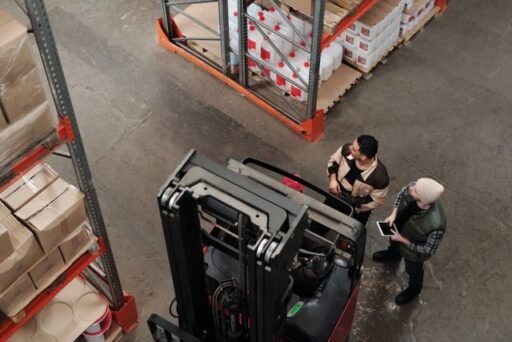
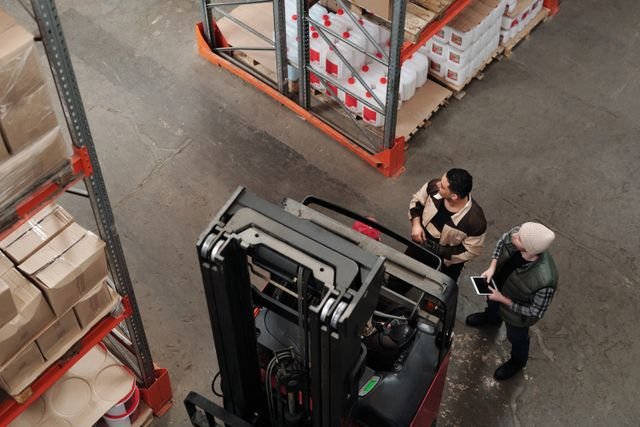

Go down to your warehouse floor right now and watch the material flow. You will see multi-ton machines moving across aisles, but you will also see something that drains your bottom line every single shift. Operators drive empty, hunt for misplaced pallets, or idle in dead zones while orders pile up.
Most facility managers try to fix this by buying more hardware or adding headcounts. That approach ignores the real issue. Without real-time visibility, you manage a ghost fleet where wasted travel miles, and operator bottlenecks remain completely invisible. Implementing a rugged Forklift Tracking system changes the equation by turning physical floor movements into actionable operational data.
What Negatively Impacts ROI in Warehouses
Warehouse inefficiencies happen in small increments. It is the time an operator spends searching for a high-reach truck parked in an unmapped overflow zone. It is the minute wasted driving an empty truck back across a massive facility because the system cannot dynamically reassign tasks based on proximity.
When you add those fragments across twenty drivers over three shifts, margins evaporate. You pay for maintenance, fuel, and labor on machines that are not moving to product. This leads directly to asset hoarding, where teams hide functional equipment in corners just to ensure they have tools available when their work begins.
How to Beat Dashboard Fatigue in Logistics
Many operations directors hesitate to adopt tracking because they suffer from software overload. They do not need another flashing map or a passive dashboard that requires manual analysis to find a problem. They need concrete answers that prevent operational stoppages before they hit the ledger.
Effective tracking goes far beyond showing dots on a map. True operational control means connecting the physical machine directly to your warehouse execution layer. When a driver enters a specific zone, the system must recognize the vehicle, validate the task, and ensure the operator executes the correct movement without relying on paperwork.
Dead Travel and Empty Miles
A forklift operating at fifty percent utilization is a liability. Dead travel occurs when a truck moves across the facility without a load. Tracking hardware records these empty trips, allowing managers to restructure cross-docking workflows and enforce dual-cycling patterns where every trip includes a drop-off and a pickup.
Phantom Fleets and CapEx Creep
When operations feel slow, the default corporate reaction is to lease more equipment. This is how operations end up with a phantom fleet, which is an over-provisioned inventory of machines that spend most of their lifecycles sitting idle. Tracking data reveals exactly how many hours your assets are active, helping CFOs avoid unnecessary capital expenditures.
Why Hardware Lock-In is a Bad Idea
The industrial market is flooded with proprietary hardware ecosystems. Purchasing trackers from a vendor who forces you to use their specific sensors creates an operational trap. If that technology fails to scale or lacks accuracy in a new building, your investment is dead.
Your facility needs a flexible architecture that adapts to the environment. A heavy manufacturing bay might require Ultra-Wideband for sub-meter accuracy around critical staging zones, while a standard rack aisle might only need Bluetooth infrastructure. A smart tracking deployment mixes and matches these physical layers into a single operational view.
Engineering Real Outcomes in Warehouses using RTLS
True efficiency requires connecting location data to your logistics execution systems. This setup eliminates human errors on the floor. For instance, when an asset enters a moving geofence, the system automatically transmits specific vehicle data to the central controller, matching the exact work order to the machine without manual input.
RTLS (Real-Time Location Systems) removes traditional fixed-station reliance, allowing you to establish dynamic workstations anywhere on your floor. It ensures that missing assets never halt production lines, eliminates search time completely, and issues proactive alerts before an expired calibration causes a quality failure.
The Systems Integration Advantage with LocaXion
LocaXion is the world’s first pure-play RTLS & Digital Twin systems integrator. We engineer systems for your business outcomes-not just “tracking.”
That means less risk, less integration of guesswork, and faster time-to-value. And because we’re not locked to one technology stack, you get the freedom to scale with the right technology – not the technology we happen to sell.
RTLS tracks your assets. LocaXion transforms how your operation runs.
That’s the difference. And it’s not a small one.
Stop bleeding margins on empty forklift miles and engineer your outcomes today at locaxion.com