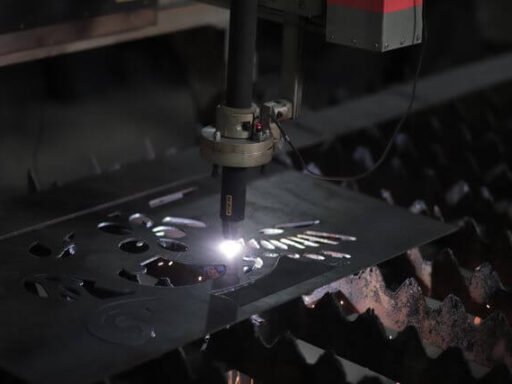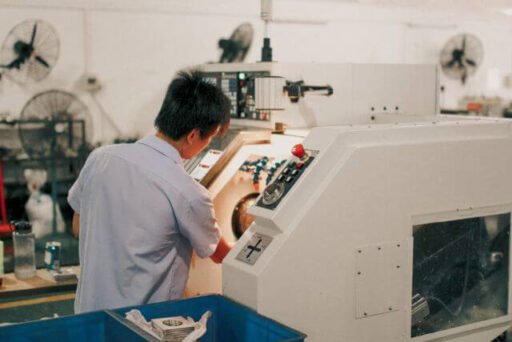

For many companies, manufacturing is viewed as an operational function—a necessary step that takes place after product development and before products reach customers. It is often grouped with logistics, procurement, and production planning, with a primary focus on reducing costs and improving efficiency.
However, this traditional view is becoming increasingly outdated.
In today’s highly competitive business environment, manufacturing is no longer just an operational concern. It has become a critical growth strategy that directly influences a company’s ability to innovate, scale, compete, and capture market opportunities.
Businesses that treat manufacturing as a strategic asset often outperform competitors that view it solely as a production function. From startups launching new products to established brands expanding into new markets, manufacturing decisions can significantly impact business growth, profitability, and long-term success.
The Link Between Manufacturing and Business Growth
Growth depends on a company’s ability to deliver products to customers quickly, consistently, and profitably. While marketing and sales often receive most of the attention, neither can succeed without a reliable manufacturing foundation.
A company may have an excellent product idea and a strong marketing strategy, but if production delays occur, quality issues arise, or supply chains become unstable, growth can quickly stall.
Manufacturing influences several critical business outcomes:
- Speed to market
- Product quality
- Customer satisfaction
- Scalability
- Profit margins
- Brand reputation
When these factors are managed effectively, businesses can grow faster and operate more efficiently.
Why Time-to-Market Matters More Than Ever
In many industries, being first—or simply being faster—can provide a significant competitive advantage.
Consumer preferences change rapidly. Technology evolves continuously. Market opportunities often have a limited window.
Companies that can move from concept to production quickly are better positioned to capture demand before competitors enter the market.
Unfortunately, manufacturing bottlenecks often become the biggest obstacle to product launches. Delays in tooling, prototyping, supplier coordination, or production readiness can postpone a launch by weeks or even months.
A strategic manufacturing approach focuses on reducing these delays through better planning, rapid prototyping, and early collaboration with production partners.
Organizations that prioritize manufacturing readiness during product development frequently achieve shorter development cycles and faster revenue generation.
Scalability Begins Long Before Demand Increases
Many businesses focus on scaling only after customer demand begins to grow. By that stage, it may already be too late.
True scalability starts during product development.
Questions such as the following should be addressed early:
- Can production volumes increase rapidly?
- Are suppliers capable of supporting growth?
- Can quality remain consistent at higher volumes?
- Will manufacturing costs remain sustainable?
Companies that ignore these considerations often encounter operational challenges when growth accelerates.
On the other hand, businesses that build scalable manufacturing systems from the beginning are better prepared to seize growth opportunities without compromising quality or customer experience.
Working with experienced manufacturing partners such as EzraMade can help companies develop production strategies that support both current needs and future expansion.
Manufacturing Quality Directly Impacts Brand Value
A company’s reputation is built on customer experiences.
Even the most effective marketing campaign cannot compensate for products that arrive defective, inconsistent, or unreliable.
Manufacturing quality affects:
- Customer retention
- Product reviews
- Warranty claims
- Return rates
- Brand trust
As consumers become increasingly vocal through online reviews and social media, product quality has become more visible than ever.
Businesses that invest in quality-focused manufacturing processes often experience stronger customer loyalty and improved brand perception.
Rather than viewing quality control as a cost, successful companies recognize it as an investment in long-term growth.
Cost Reduction Is Not Always the Best Strategy
For decades, many organizations selected manufacturing partners primarily based on price.
While controlling costs remains important, choosing the lowest-cost option can create significant risks.
Poor manufacturing decisions can lead to:
- Product defects
- Production delays
- Supply chain disruptions
- Increased returns
- Lost customers
The hidden costs of these issues often exceed any initial savings.
Modern growth-focused companies evaluate manufacturing partners based on value rather than price alone. They consider expertise, reliability, communication, quality systems, and scalability.
This approach helps reduce operational risk while creating a stronger foundation for long-term business growth.
Manufacturing Drives Innovation
Innovation is often associated with product design and research and development. Yet manufacturing plays an equally important role.
Many breakthrough products become successful because companies can manufacture them efficiently and consistently at scale.
Modern manufacturing technologies enable businesses to:
- Develop products faster
- Test new concepts more quickly
- Reduce development risks
- Improve product performance
- Accelerate market entry
For example, advanced prototyping, tooling technologies, and professional injection molding services allow companies to move from design concepts to production-ready products much faster than in previous decades.
When manufacturing teams and product development teams collaborate closely, innovation becomes more practical, scalable, and commercially viable.
Strong Manufacturing Creates Competitive Advantages
In highly competitive markets, products alone are rarely enough to maintain long-term differentiation.
Competitors can often replicate features, pricing strategies, and marketing campaigns.
Operational excellence, however, is much harder to copy.
Companies with strong manufacturing capabilities can often:
- Launch products faster
- Maintain higher quality standards
- Respond to market changes more quickly
- Improve customer satisfaction
- Protect profit margins
These advantages compound over time and contribute directly to sustainable growth.
Businesses that understand this relationship increasingly view manufacturing as a strategic capability rather than a back-office function.
The Future Belongs to Manufacturing-Driven Businesses
As global competition intensifies, manufacturing will continue to play a larger role in business success.
Supply chain disruptions, rising customer expectations, and accelerating product cycles are forcing organizations to rethink traditional approaches.
The companies that thrive in the coming years will be those that integrate manufacturing into their growth strategies from the very beginning.
Rather than asking how manufacturing can reduce costs, forward-thinking leaders are asking a different question:
How can manufacturing help us grow faster?
The answer often determines which companies become market leaders and which struggle to keep pace.
Conclusion
Manufacturing is no longer simply an operational necessity. It is a strategic growth driver that influences speed, scalability, innovation, quality, and profitability.
Companies that recognize this shift gain a significant competitive advantage. They launch products faster, adapt more effectively to market changes, and create stronger customer experiences.
In an increasingly competitive global marketplace, manufacturing should not be viewed as a cost center. It should be viewed as a growth strategy—one capable of shaping the future success of an entire business.