
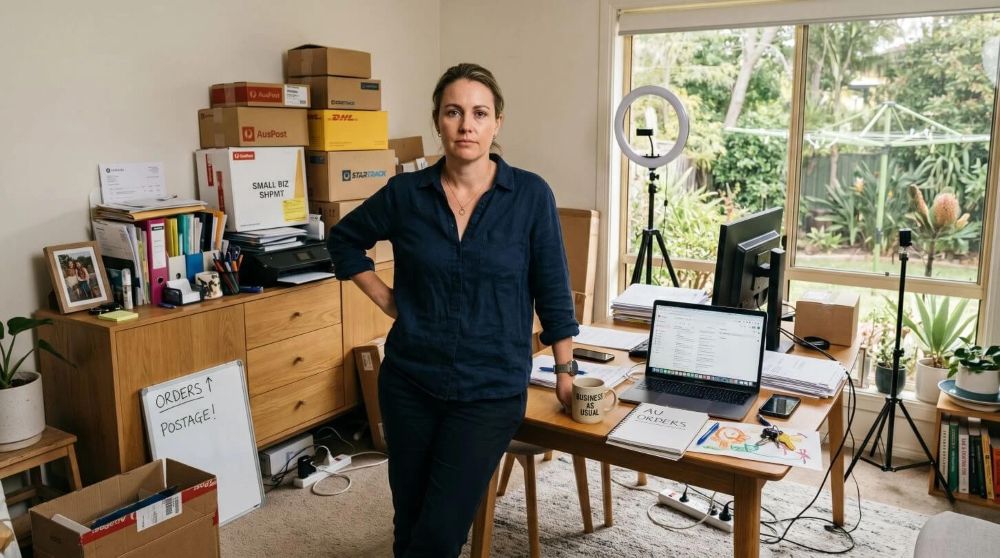

Running a business from home sounds lean until your spare room turns into a stockroom, your kitchen becomes a meeting space, and your electricity bill starts behaving like you run a small factory. People love to call it “low overhead”. That only works if your time has no value and your house never pushes back. In the real world, it does.
Cheap on paper, expensive in practice
Most owners only count the obvious savings. No commercial lease. No commute. Maybe no receptionist. Great.
Then the real costs start stacking up. Faster internet. Better mobile coverage. Extra heating or cooling through business hours. A proper chair because your back isn’t a tax deduction miracle. More cleaning. More wear on the house. More deliveries. More interruptions. If you’ve got staff or contractors coming and going, add tea, coffee, loo paper, and the quiet resentment of watching your home stop feeling like home.
I tracked my own time when I worked from home full-time for a stretch. Over ten business days, I lost just over 7 billable hours to nonsense. Couriers. Door knocks. Household jobs pretending to be “quick wins”. A neighbour with a leaf blower and a deep personal commitment to chaos. That’s almost a full workday. Not theory. Actual time I could’ve invoiced.
And yes, the ATO lets you claim some home office costs. Good. Take the deduction. But don’t confuse a tax claim with a business model.
Your house starts doing jobs it was never built for
A house handles living. It does not automatically handle client meetings, confidential calls, inventory storage, admin, dispatch, and professional boundaries all at once.
Privacy gets messy fast. Use your home address on invoices and registrations long enough and it spreads everywhere. Clients keep it. Suppliers keep it. Random people keep it. If something goes wrong with a delivery or a customer gets difficult, guess where that frustration points.
Security gets ugly too. Stock at home attracts risk. Laptops at home attract risk. Paper records, samples, tools, camera gear, meds, devices, trade equipment, whatever you use, they all create one very dumb setup. You concentrate business assets and personal assets in the same place and hope nothing happens. That’s not a strategy. That’s wishful thinking with a front door.
The last time I tried running back-to-back calls from home, a courier buzzed, the dog kicked off, and I had to apologise three times in twenty minutes. The clients were polite. They always are. They still notice. If you sell premium work, you need a setup that feels premium. Simple as that.
Apartment rules can kill your momentum
If you live in a unit, townhouse complex, or mixed-use building, don’t assume you can quietly “just run a business” and sort it out later. Check the by-laws first. Then check them again.
I’ve seen owners bring in clients, stack deliveries in common areas, or use visitor parking like it belongs to them. That ends badly. Fast. Noise complaints, access issues, rubbish problems, insurance arguments, and neighbour drama all waste time you should spend on the business itself. If the building has someone managing body corporate services, ask the question before you create the problem.
People ignore this because it feels boring. Fair enough. It is boring. It still matters.
The rule of thumb? If your work increases foot traffic, deliveries, signage, waste, noise, or security risk, your home setup stops being “just a home office”. Once that happens, the building rules start calling the shots, not you.
Smarter alternatives usually cost less than the mess
You don’t need a fancy CBD office with polished concrete and a receptionist named Chloe. You need the right setup for the work you actually do.
For a lot of Australian businesses, that means mixing options:
- A coworking space for calls, meetings, and focus days
- A virtual office for a cleaner business address
- Casual meeting rooms when clients need face time
- A small storage unit for stock, tools, or event gear
- A serviced office one or two days a week if you need privacy and predictability
- A commercial kitchen, clinic room, studio, or workshop only when the work demands it
One client of mine in Brisbane moved from full-time home operation to a hybrid setup with coworking twice a week and offsite storage. Their direct property costs went up by about $420 a month. Their wasted time dropped by roughly 9 hours a month, and their proposal close rate jumped from 31% to 44% within a quarter. Why? Better meetings. Better focus. Better separation. They stopped selling six-figure work from a dining table with a fruit bowl in the background.
That’s the part people miss. The cheapest setup often produces the weakest output.
Keep valuables out of the house
If you keep high-value personal items at home while also storing business equipment or stock there, you’re multiplying risk for no good reason. I don’t care how solid your deadbolt looks. A lot of home security plans collapse the second someone actually tests them.
For items you’d hate to lose, separate sentiment from convenience. I’ve told clients this for years, especially the ones blending family assets with business operations in the same space. For genuinely high-value personal pieces, bank lockers for jewellery make far more sense than a bedroom cupboard and a vague promise that insurance will “probably cover it”.
That same logic applies to business assets. Use proper storage. Use documented inventory. Use alarms, access control, and clear insurance cover. Small safes help a bit, but plenty of them just become heavy donation boxes for thieves with tools and motivation. Charming image, I know.
If you wouldn’t leave 20,000 on a hallway shelf, don’t create an equivalent risk through lazy storage.
Hybrid beats all-or-nothing thinking
Most businesses don’t need a full office. Most also shouldn’t try to do everything from home. The smart move sits in the middle.
Do admin, writing, bookkeeping, planning, and quiet work from home if that space suits you. Move meetings, stock, dispatch, consulting, and anything client-facing into a setup built for the job. Protect your address. Protect your time. Protect your house from becoming a weird half-office, half-warehouse, half-domestic argument. Yes, that’s three halves. That’s what these setups feel like after six months.
Ask one blunt question. Does your current setup help you do better work, or does it simply look cheaper on a spreadsheet?
If home still works, fine. Keep it tight. Set boundaries. Upgrade properly. But if your business has outgrown the spare room, believe it the first time. Waiting another year won’t make the cracks look prettier.
Run the business from the right space. Your home doesn’t need a second job.