
Designing office exteriors in Texas requires more than standard landscaping choices because the climate puts constant pressure on both materials and outdoor spaces. Heat, drought, and sudden storms create conditions where decorative approaches quickly fall short.
What if landscaping could do more than improve appearance and actually support performance, comfort, and long-term cost control? When planned strategically, it becomes a key part of how a building manages temperature, water, and daily usability. The result is an exterior that not only looks better but works more efficiently year-round.
Why Landscaping in Texas Matters More Than You Think
In Texas, landscaping does far more than improve how an office looks from the street. It plays a direct role in how a building handles heat, manages water, and supports everyday use. Many office exteriors are still designed with aesthetics as the priority, but that approach often leads to higher energy bills and ongoing maintenance issues.
What happens when outdoor spaces absorb and radiate heat all day long? The building works harder to stay cool, and the people using it feel the difference immediately.
Smart landscaping shifts the focus from decoration to performance. Trees, ground cover, and layout decisions can reduce surface temperatures, improve airflow, and make outdoor areas usable even during hotter months. Offices that invest in functional landscaping tend to see fewer replacements, less irrigation waste, and better overall usability.
Texas Isn’t an Easy Place to Build
Texas presents a combination of challenges that many standard design approaches simply aren’t built to handle. Long periods of intense heat place constant stress on materials and plant life, while drought conditions limit how much water can realistically be used.
At the same time, sudden storms can overwhelm poorly designed drainage systems in a matter of minutes. How do you design for both extremes without overcomplicating the system? The answer lies in planning for variability, not stability.
Soil conditions and regional differences also play a significant role in how landscaping performs. Some areas deal with compacted or clay-heavy soil, while others face erosion or poor water retention. Wind exposure and storm intensity further influence what plants survive and how outdoor layouts should be structured.
When these factors are overlooked, even well-intentioned designs can fail within a short time. Understanding the local environment is the first step toward building something that actually lasts.
Shade Isn’t Optional in Texas
Shade is one of the most effective tools for reducing heat, yet it is often underutilized in office exterior design. Trees can significantly lower temperatures around buildings, especially when placed near windows or along sun-exposed walls.
Without adequate shade, surfaces like concrete and glass absorb and retain heat, making both indoor and outdoor environments less comfortable. What difference does a well-placed tree really make? In many cases, it can reduce surrounding temperatures by several degrees.
Combining natural shade with built structures creates even more reliable coverage. Pergolas, canopies, and overhangs can fill gaps where trees take time to mature or where space is limited. Parking areas, in particular, benefit from additional shade, as they are often large heat-generating zones.
Shaded parking not only improves comfort but also reduces heat buildup that radiates toward the building. Over time, these strategies contribute to lower cooling demands and more consistent indoor conditions.
The Right Plants Make All the Difference
Plant selection is one of the most important decisions in Texas landscaping, yet it is often driven by appearance rather than performance. Native plants are typically the most reliable choice because they are already adapted to local conditions, including heat and limited water availability.
However, not all native plants are equally suited for commercial spaces, and some adapted species can perform just as well. What matters most is choosing plants that can handle stress without constant intervention.
Durability should always take priority over short-term visual impact. Plants that require frequent watering, trimming, or replacement can quickly drive up maintenance costs. That’s why many commercial landscapes rely on hardy ground covers or drought-tolerant turf like zoysia, which offers a cleaner look without constant upkeep.
Planning for seasonal changes and long-term growth patterns helps avoid overcrowding and uneven landscapes. A well-designed plant palette will look consistent throughout the year without requiring excessive upkeep. In the long run, resilient plant choices lead to more stable and predictable results.
How Landscaping Helps Beat the Heat at Ground Level
Ground-level heat is often overlooked, yet it has a significant impact on how outdoor spaces feel and function. Large areas of concrete and asphalt absorb heat throughout the day and release it slowly, creating uncomfortable conditions even after the sun sets.
This effect can make walkways, entry points, and gathering areas difficult to use. Why does this matter for office environments? Because it directly affects how people move through and interact with the space.
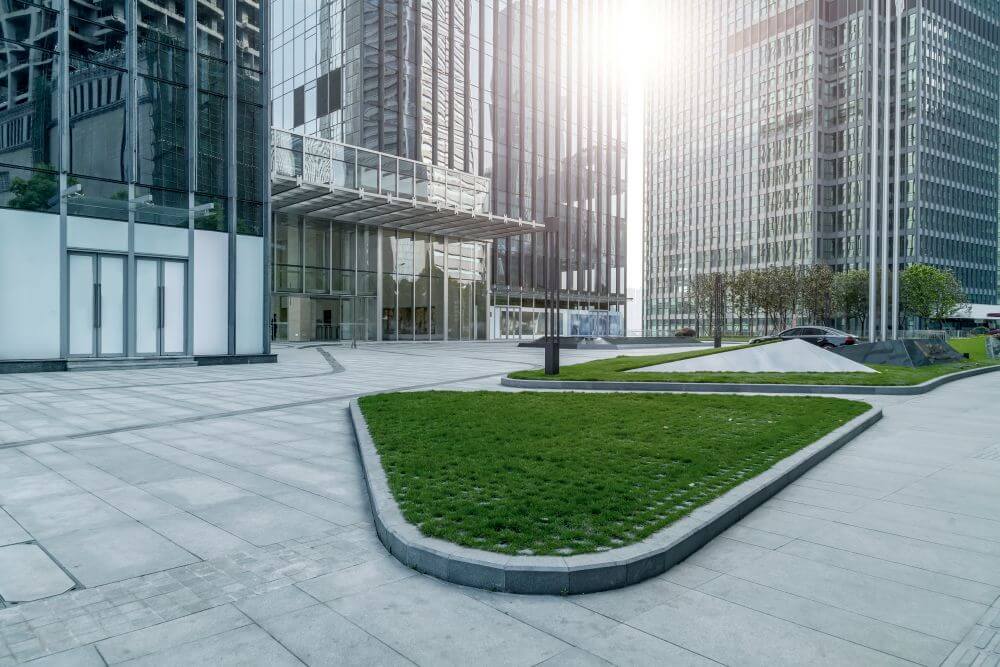
Replacing or breaking up heat-absorbing surfaces with alternative materials can make a noticeable difference. Permeable pavers, gravel, and mixed-material designs reduce heat retention while improving drainage. Vegetation also plays a key role by providing natural cooling through shade and evapotranspiration.
These strategies help create microclimates that feel significantly cooler than surrounding areas. As a result, outdoor spaces become more functional and inviting throughout the day.
Less Maintenance with Better Results
Low-maintenance landscaping is not about doing less work, it is about making smarter decisions from the start. Grouping plants with similar water and care requirements simplifies irrigation and reduces the risk of overwatering or neglect.
This approach also makes maintenance more predictable and efficient. What seems like a small design choice early on can prevent ongoing issues later. Over time, these efficiencies translate into real cost savings.
Short-term decisions often lead to long-term problems when durability is not considered. Choosing cheaper materials or high-maintenance plants may reduce initial costs, but it usually increases the need for repairs and replacements. A well-planned landscape minimizes these risks by focusing on longevity and performance. Fewer interventions mean less disruption to daily operations and a more consistent appearance.
Where Most Office Landscaping in Texas Goes Wrong
Many common landscaping mistakes in Texas stem from applying generic design approaches to a demanding environment. Overusing turf grass is one example, as it requires significant water and maintenance to survive in high heat.
Ignoring drainage is another frequent issue that leads to pooling and erosion over time. What happens when these problems are left unaddressed? They often become more expensive and disruptive to fix later.
Poor tree placement and limited shade coverage also reduce the effectiveness of otherwise well-designed spaces. Without enough shade, surfaces heat up quickly and make outdoor areas less usable. Choosing plants that require constant care or excessive watering further adds to the problem. Landscaping should be integrated into the overall design from the beginning, not treated as an afterthought.
It’s Not Just About Looks, There’s Real Business Value Here
Smart landscaping has a direct impact on operational costs and overall business performance. By reducing heat around the building, it lowers the demand on cooling systems and helps stabilize energy use.
This leads to more predictable expenses and improved efficiency. Can exterior design really influence the bottom line that much? In many cases, the answer is yes, especially over the long term.
There are also indirect benefits that are just as important. Comfortable outdoor spaces improve the experience for employees and visitors, making the environment more appealing and functional. A well-maintained exterior creates a stronger first impression and reinforces a sense of professionalism.
Conclusion
Smart landscaping changes how office exteriors function by addressing heat, water management, and long-term durability in a coordinated way. Each decision, from plant selection to shade placement, contributes to lower maintenance needs and more consistent performance over time.
Is it worth treating landscaping as a core part of design rather than a finishing touch? In a climate as demanding as Texas, that shift often determines whether an exterior holds up or requires constant fixes. Focusing on resilience, efficiency, and usability leads to spaces that perform reliably and support both the building and the people who use it.